The Ayurveda Nest library
Ayurveda, explained properly.
Over forty guides to the doshas, food, symptoms, herbs and daily rhythm — written from the classical texts, without the wellness fluff.
Foundations
What Is Ayurveda? A Clear Introduction to the Science of Life
Ayurveda is a 3,000-year-old system of medicine from India built on the three doshas. Learn how it works, what it treats, and where to begin.
The Three Dosha Types: Vata, Pitta and Kapha Explained
What are the three doshas? A clear guide to Vata, Pitta and Kapha — their qualities, body and mind traits, dual types, and how to find yours.
Prakriti vs Vikriti: Your Constitution and Your Current Imbalance
Prakriti is the dosha balance you were born with; vikriti is your state today. Learn the difference and why it changes what you should do.
Dual Dosha Types: Vata-Pitta, Vata-Kapha and Pitta-Kapha
Most people are a dual dosha. How Vata-Pitta, Vata-Kapha and Pitta-Kapha constitutions behave, where they struggle, and how to balance each.
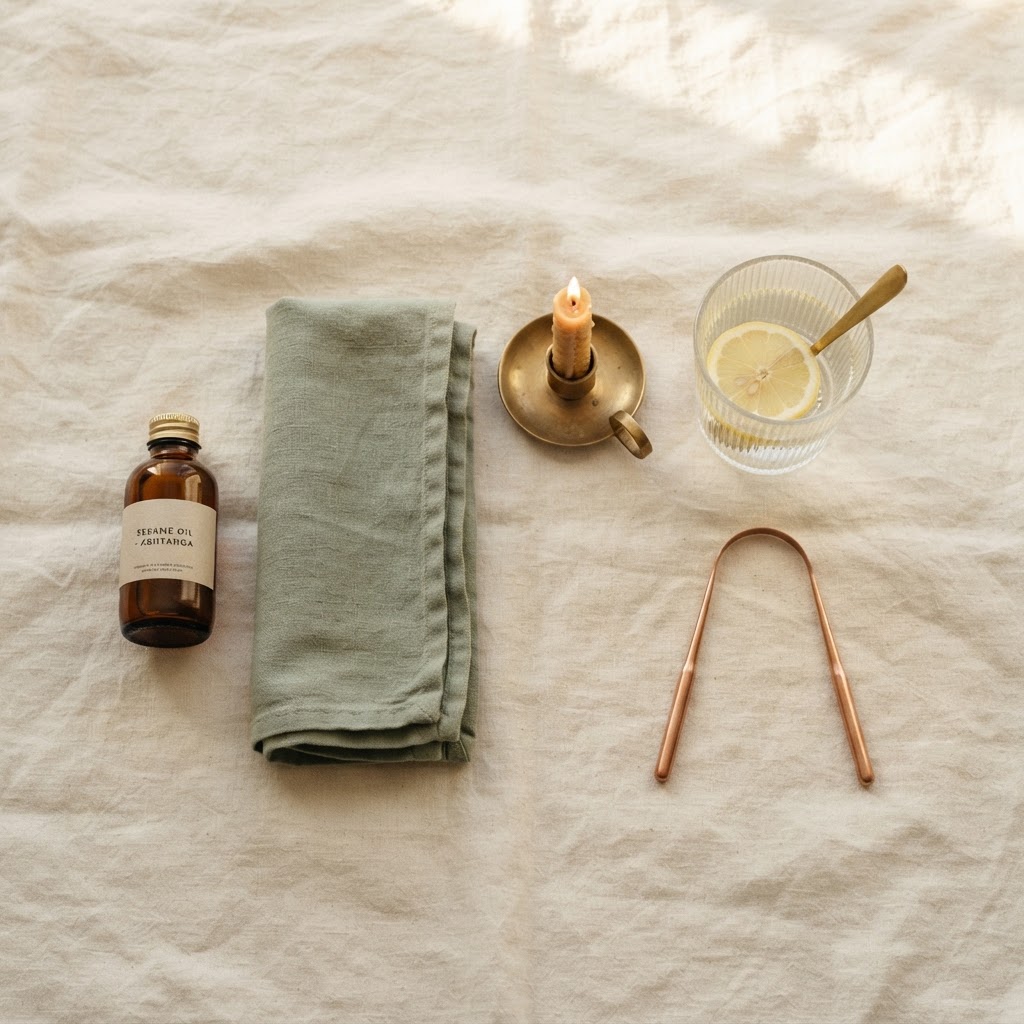
Dinacharya: The Ayurvedic Daily Routine, Hour by Hour
Dinacharya is the Ayurvedic daily routine. A practical morning-to-night schedule — waking, tongue scraping, meals, movement and sleep — by dosha clock.
The Doshas

Vata Dosha: Traits, Imbalance and How to Balance It
Vata is the air-and-space dosha that governs movement. Learn Vata body and mind traits, signs of imbalance, and the four rules for balancing it.

Pitta Dosha: Traits, Imbalance and How to Balance It
Pitta is the fire-and-water dosha that governs digestion and metabolism. Learn Pitta traits, signs of excess heat, and how to cool and balance it.

Kapha Dosha: Traits, Imbalance and How to Balance It
Kapha is the earth-and-water dosha that governs structure and stability. Learn Kapha traits, signs of heaviness, and how to energise and balance it.

Vata Imbalance: 12 Symptoms and What to Do About Them
Anxiety, insomnia, bloating, dry skin, constipation? These are classic signs of Vata imbalance. The symptoms, causes and a practical plan to rebalance.
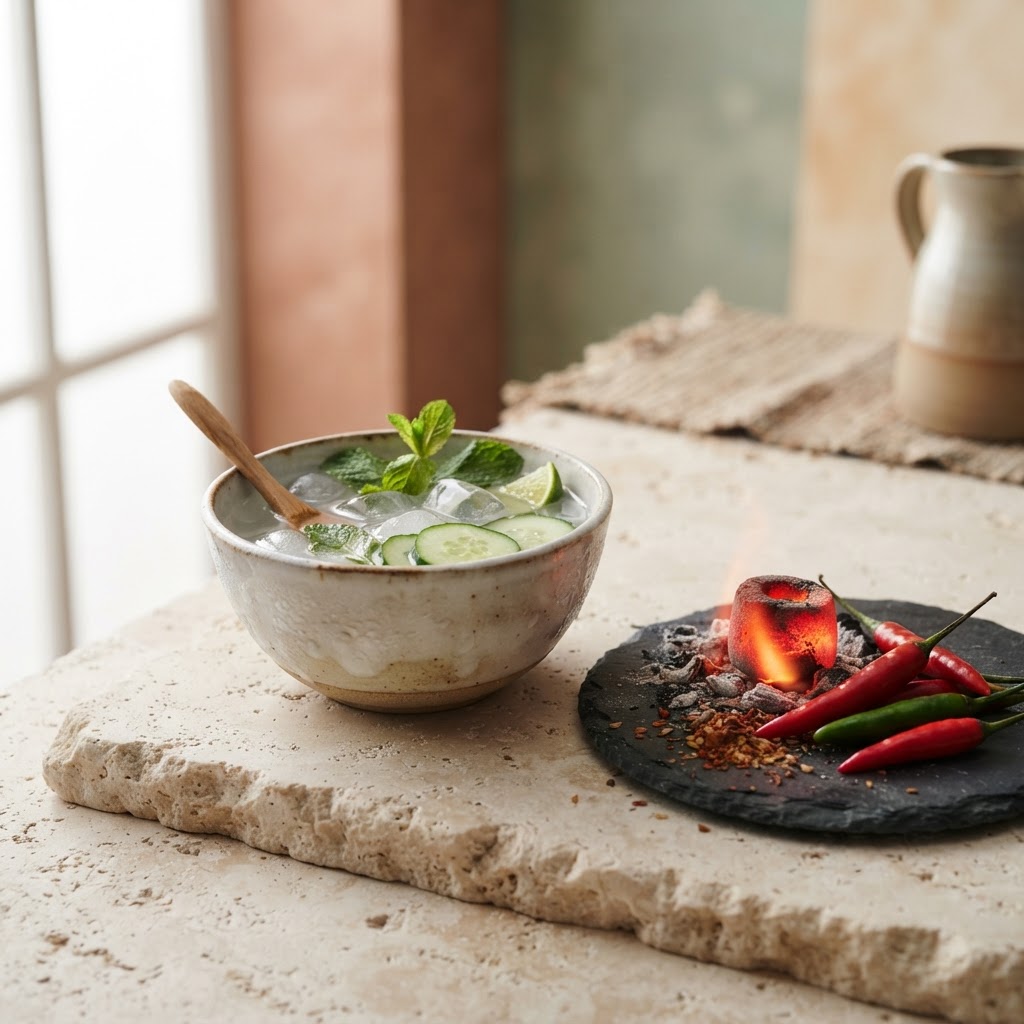
Pitta Imbalance: 12 Symptoms of Excess Heat and How to Cool Down
Irritability, heartburn, skin rashes, overheating? These are classic signs of Pitta imbalance. Symptoms, causes and a practical cooling plan.

Kapha Imbalance: 12 Symptoms of Heaviness and How to Lift Them
Sluggish mornings, weight gain, congestion, low motivation? These are classic signs of Kapha imbalance. Symptoms, causes and an energising plan.

Vata vs Pitta vs Kapha: How to Tell the Doshas Apart
A side-by-side comparison of Vata, Pitta and Kapha — body, mind, digestion, sleep and stress — so you can recognise which dosha is driving you.
Diet & Digestion

The Vata-Pitta Diet: Eating for Air and Fire
How to eat for a Vata-Pitta constitution — foods to favour and reduce, the sweet taste that suits both, and how to adjust between summer and autumn.

Pitta-Kapha Weight Loss: An Ayurvedic Approach
Why Pitta-Kapha types gain weight, the bitter and astringent foods that suit both doshas, meal timing, and exercise that works without burning out.
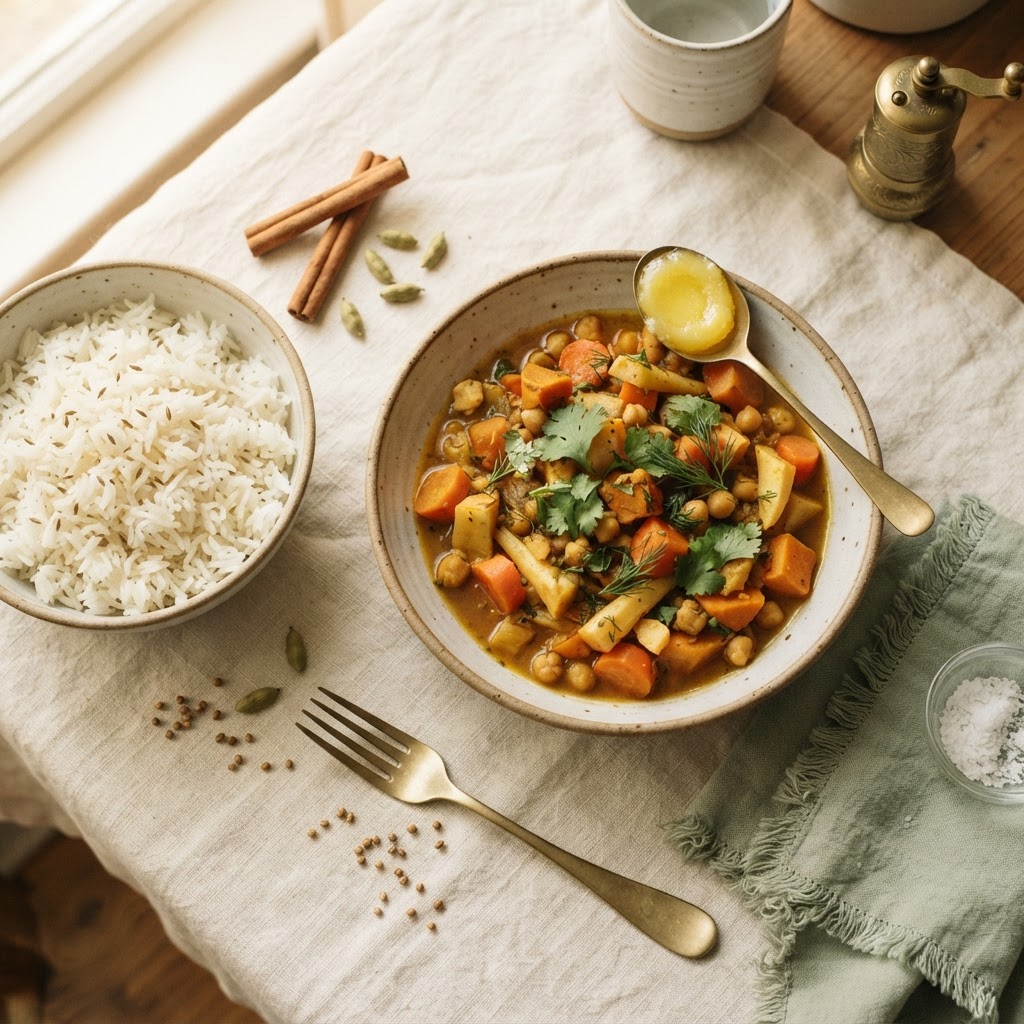
The Vata Diet: What to Eat and Avoid to Balance Vata
A practical Vata-pacifying diet: warm, moist, grounding foods to favour, foods to reduce, the best spices, and a sample day of meals.
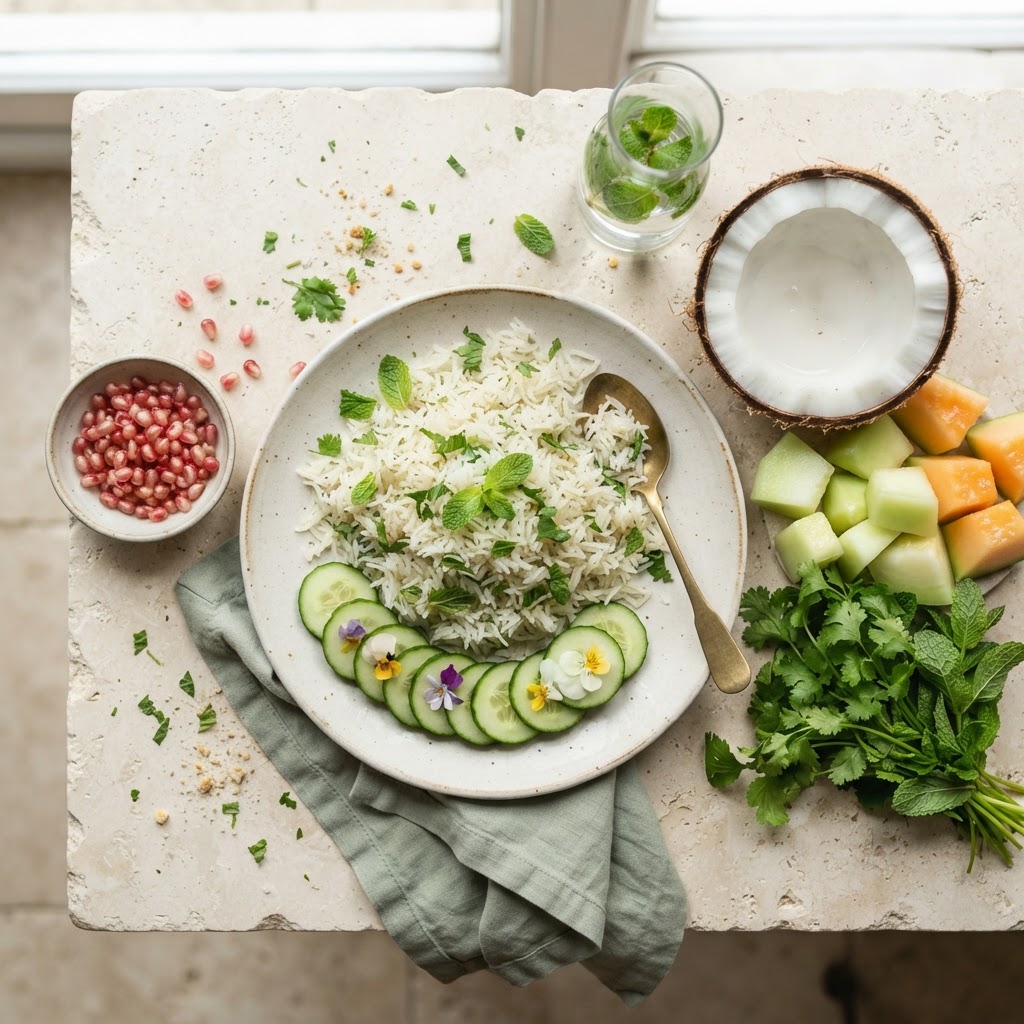
The Pitta Diet: Cooling Foods to Eat and Heating Foods to Avoid
A practical Pitta-pacifying diet: cooling, sweet, bitter and astringent foods to favour, heating foods to reduce, the best spices and a sample day.

The Kapha Diet: Light, Warming Foods to Balance Kapha
A practical Kapha-pacifying diet: light, warm, spiced foods to favour, heavy foods to reduce, the best spices and a sample day of meals.

Ayurveda for Digestion: Agni, Ama and How to Fix Bloating
Ayurveda says digestion is the root of health. Learn about agni and ama, the four digestive types, and practical ways to ease bloating and heaviness.
Symptoms & Concerns
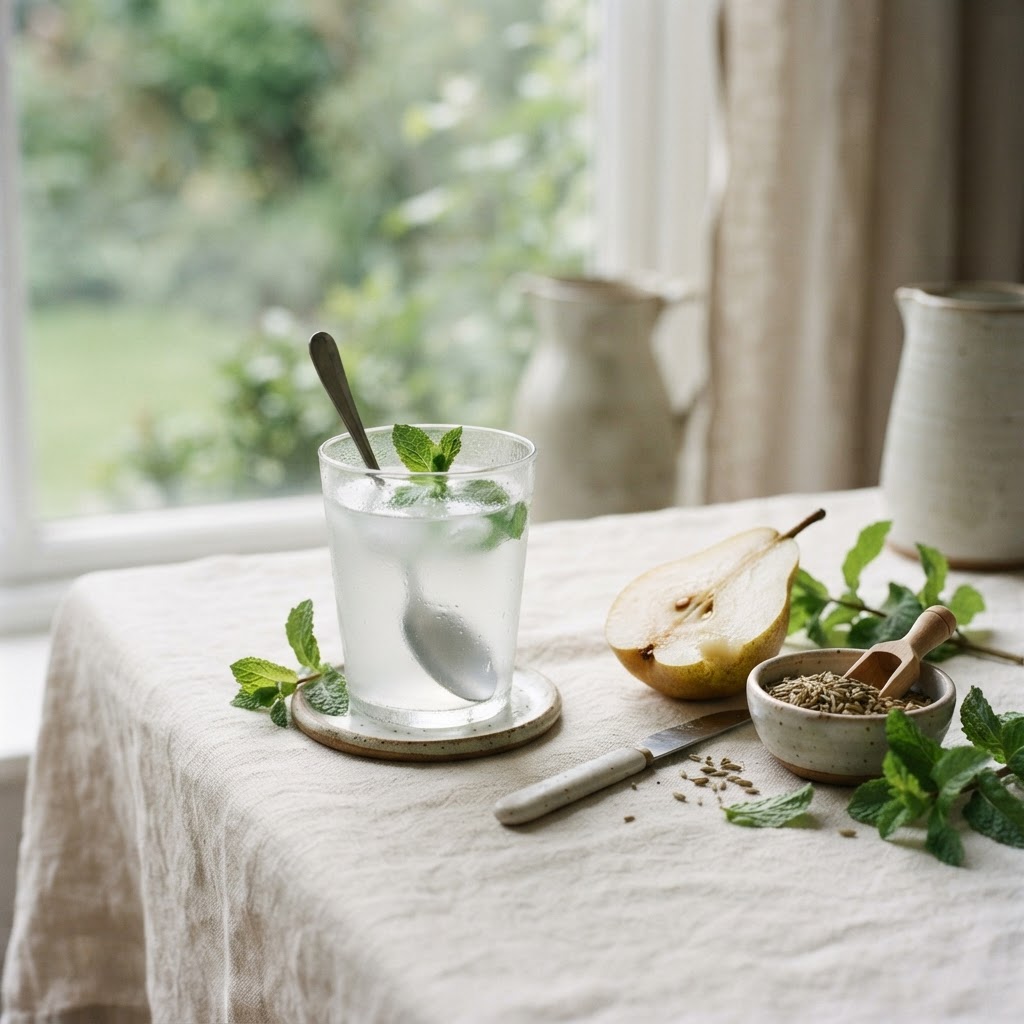
Ayurveda for Acid Reflux and Heartburn
Ayurveda calls acid reflux amlapitta — excess Pitta in the stomach. Foods to avoid, cooling foods that help, meal timing, and when to see a doctor.
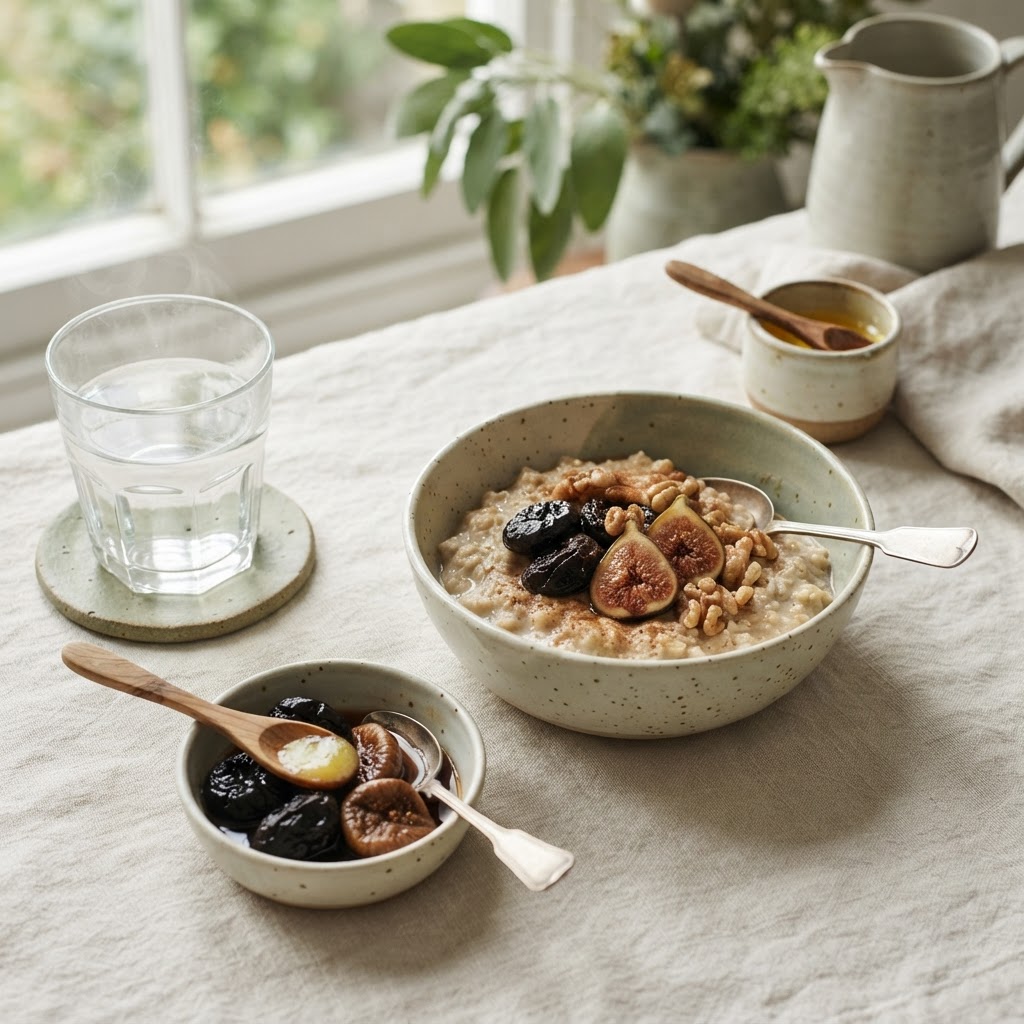
Ayurveda for Constipation: Restoring a Natural Rhythm
Ayurveda links constipation to dry, cold Vata in the colon. Warm water, ghee, cooked fibre, routine and triphala — plus the signs that need a doctor.
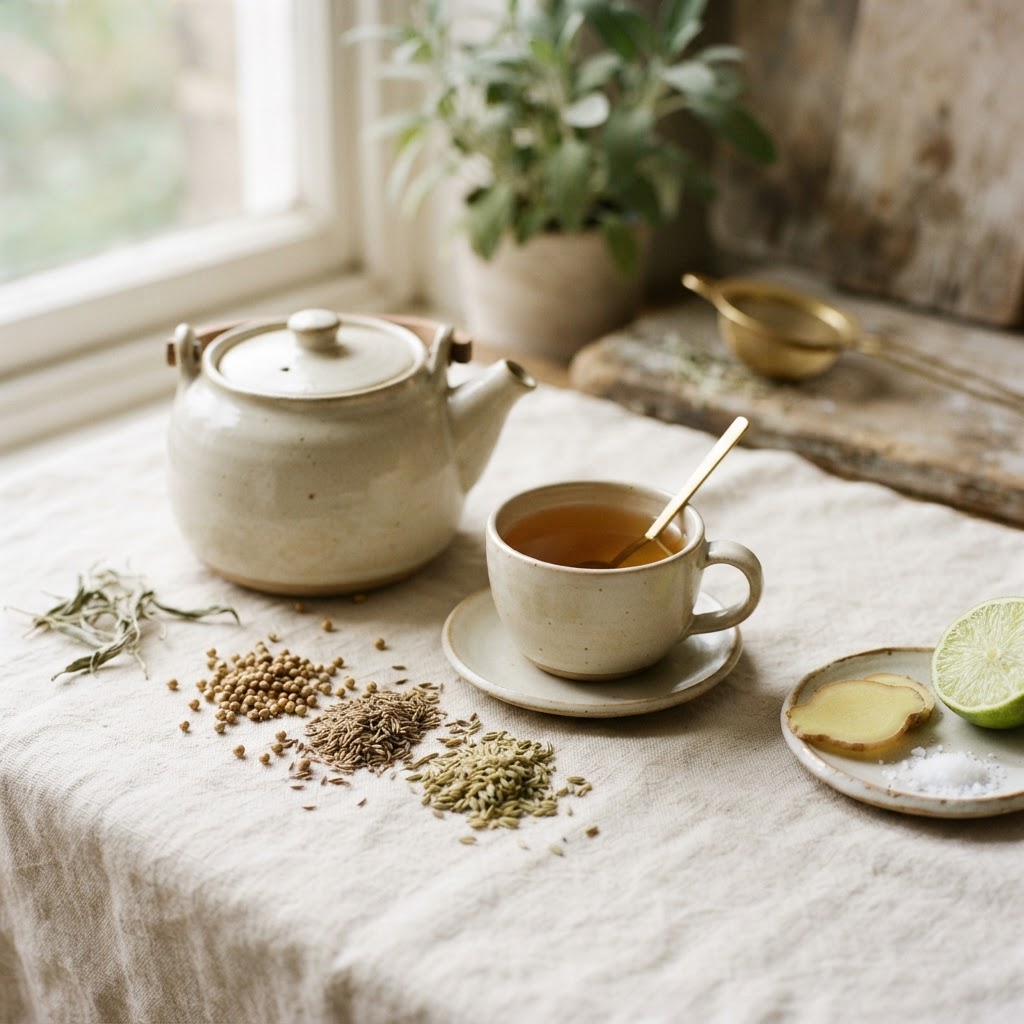
Bloating After Eating: An Ayurvedic Explanation
Why you bloat after meals according to Ayurveda — weak agni, Vata in the gut, food combining and eating habits — and simple ways to reduce it.

Ayurveda for Acne: Cooling Heat From the Inside Out
Ayurveda links acne to Pitta heat in the blood and Kapha congestion in the skin. Diet changes, cooling habits, and gentle traditional topical remedies.
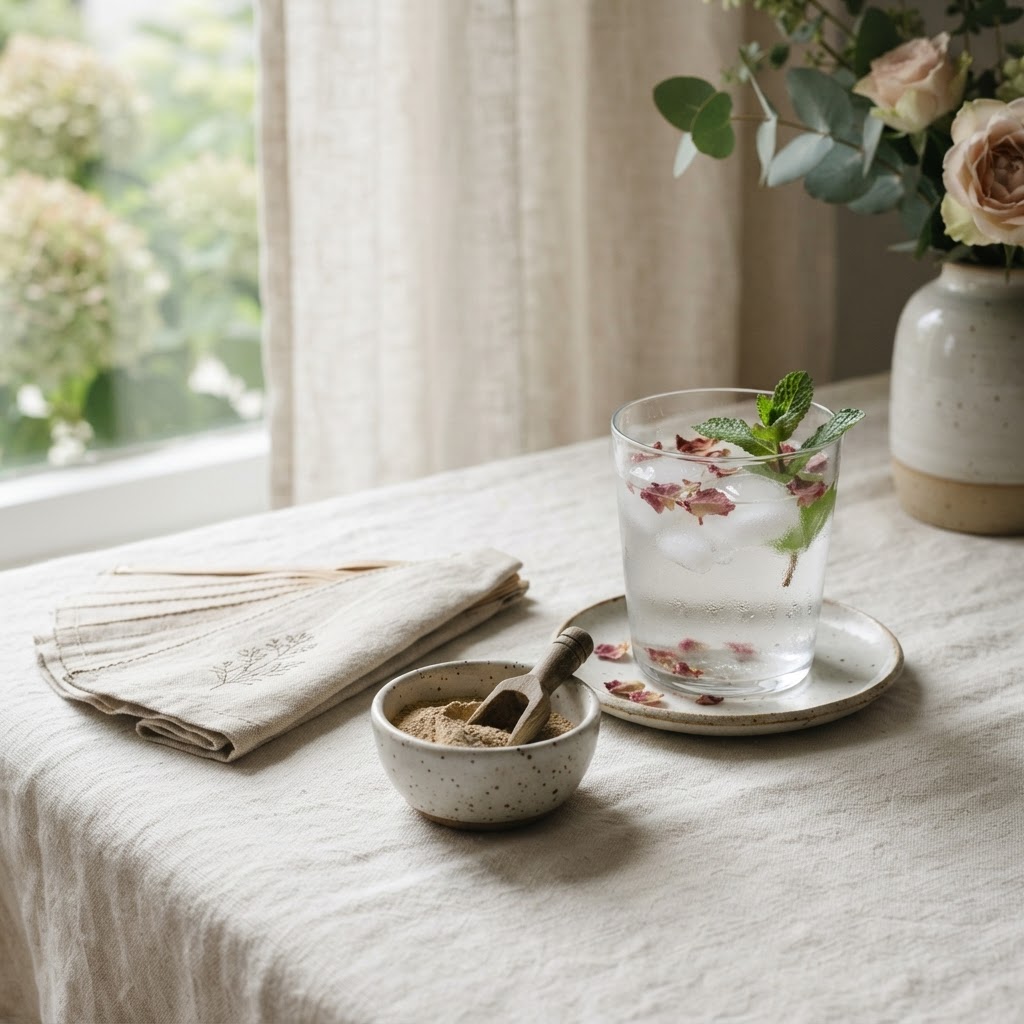
Ayurveda for Menopause: Hot Flushes, Sleep and Mood
How Ayurveda understands menopause as a transition into the Vata stage of life, and practical support for hot flushes, poor sleep, dryness and mood.

The Afternoon Energy Slump: An Ayurvedic Fix
Why energy crashes between 2 and 4pm according to Ayurveda — the Vata period, heavy lunches and poor sleep — and what to do instead of reaching for sugar.
Ayurvedic Herbs

Ashwagandha: Benefits, Dosha Effects and Safety
Ashwagandha is Ayurveda's best-known herb for stress and sleep. What the research shows, which doshas it suits, how it is taken, and who should avoid it.
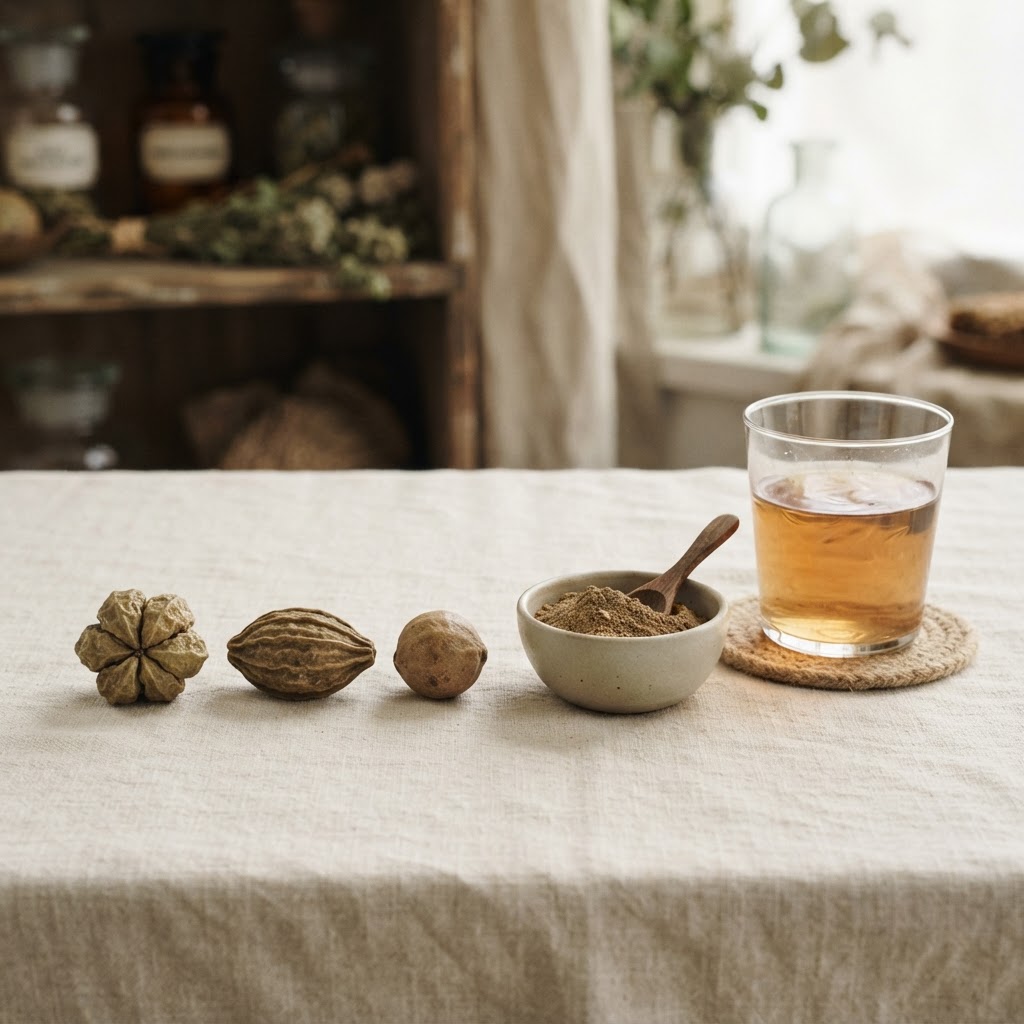
Triphala: The Three-Fruit Formula for Digestion
Triphala is Ayurveda's classic three-fruit formula of amla, haritaki and bibhitaki. How it supports digestion and regularity, how to take it, and cautions.

Turmeric and Golden Milk in Ayurveda
Turmeric in Ayurveda: its dosha effects, what curcumin research shows, why black pepper and fat matter, a classic golden milk recipe, and safety notes.
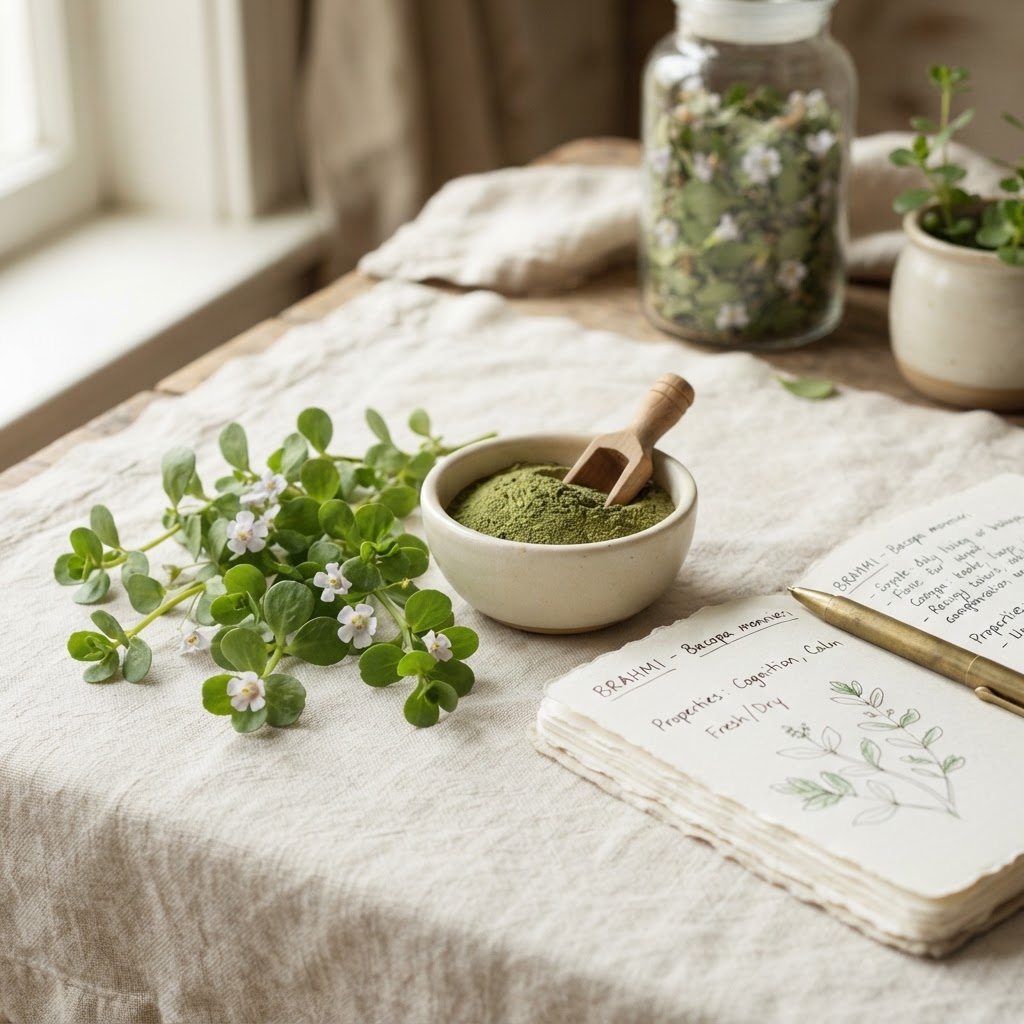
Brahmi: Ayurveda's Herb for Memory and a Calm Mind
Brahmi (Bacopa monnieri) is Ayurveda's classic herb for memory and mental clarity. What clinical trials show, how it is taken, and side effects to know.
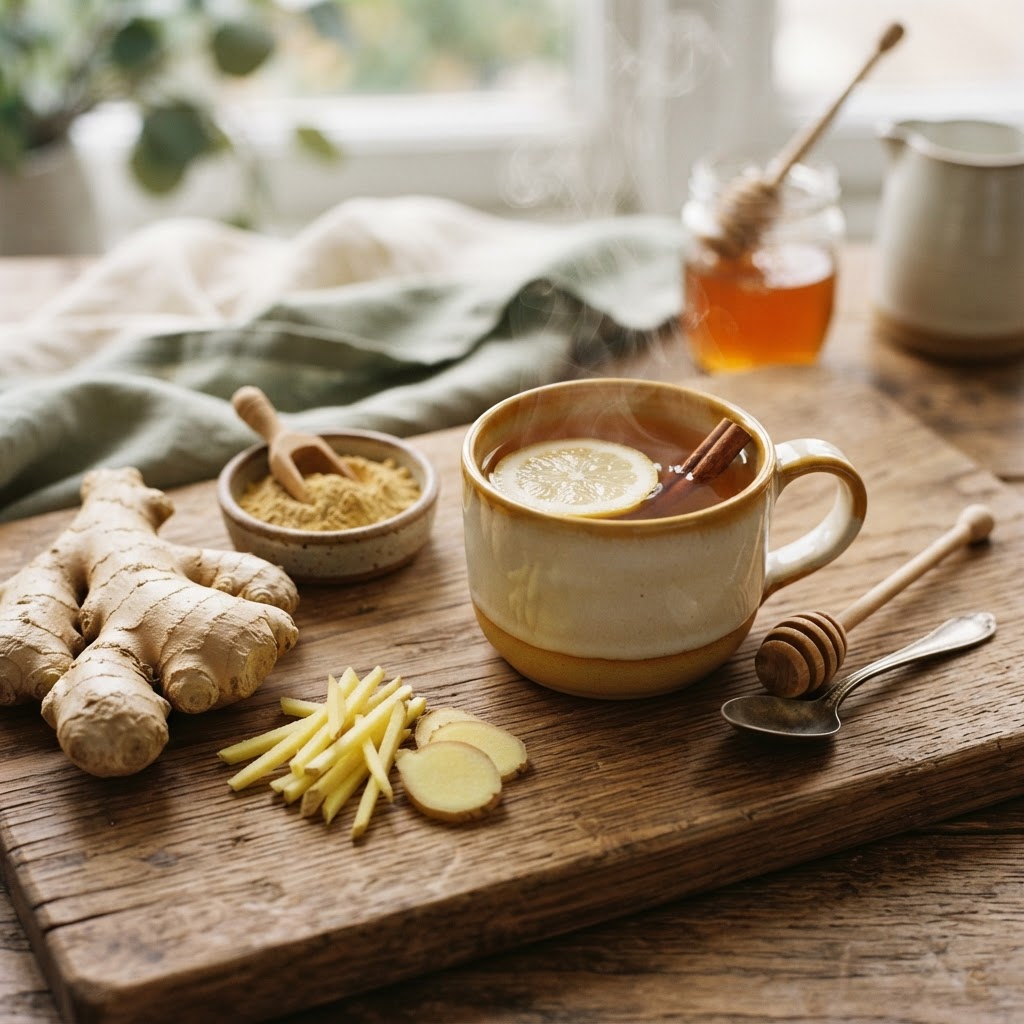
Ginger in Ayurveda: The Universal Medicine
Why Ayurveda calls ginger the universal medicine, fresh versus dry ginger, dosha effects, how to use it for digestion and nausea, and who should be careful.
Daily Practice

Ayurveda for Sleep: Why You Wake at 3am and What to Do
Ayurvedic sleep guidance: the dosha clock, why you wake at 2–4am, the 10pm rule, and an evening routine that helps you fall and stay asleep.

Ayurveda for Anxiety and Stress: Calming an Overactive Vata
How Ayurveda understands anxiety and stress, why Vata is usually involved, and grounding daily practices — food, breath, oil and routine — that help.

Tongue Scraping in Ayurveda: How and Why to Do It
Tongue scraping (jihwa prakshalana) is a two-minute Ayurvedic morning practice. What your tongue coating means, how to scrape, and what research says.
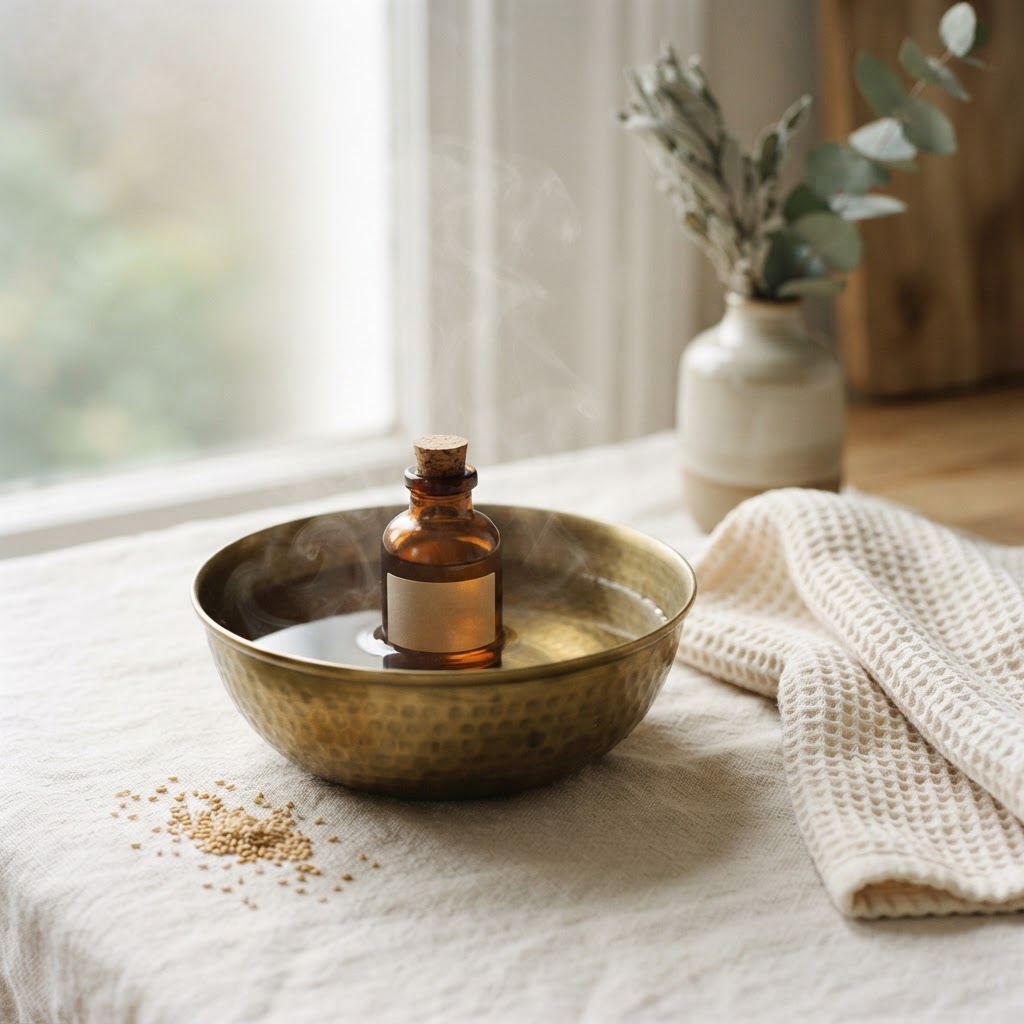
Abhyanga: The Ayurvedic Self-Massage With Warm Oil
Abhyanga is the Ayurvedic daily warm-oil self-massage. Which oil suits your dosha, a step-by-step method, benefits, and who should skip it.

Ritucharya: How to Adjust Your Routine With the Seasons
Ritucharya is the Ayurvedic seasonal routine. Which dosha rises in each season, and how to adjust food, movement and sleep for spring, summer, autumn and winter.
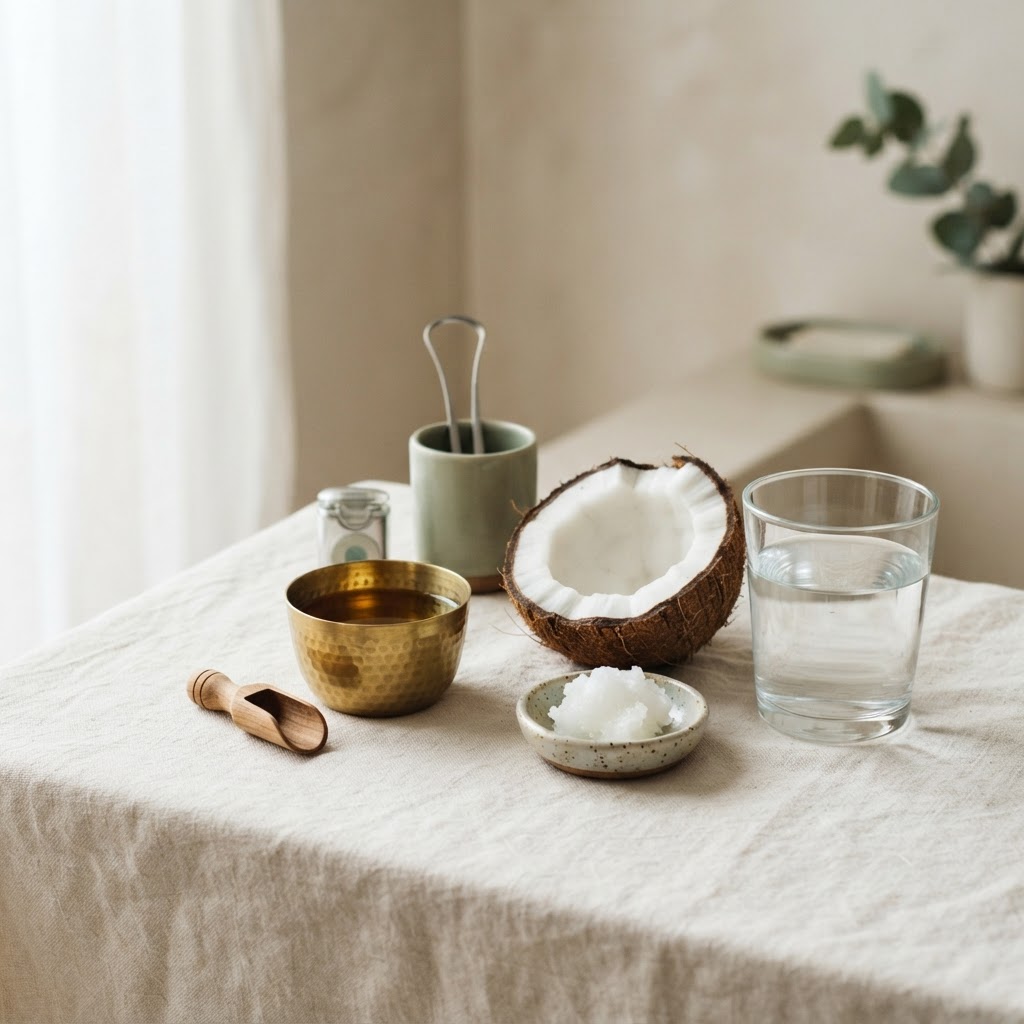
Oil Pulling: The Ayurvedic Mouth Rinse, Explained
Oil pulling (gandusha and kavala) is an Ayurvedic practice of swishing oil in the mouth. How to do it, which oil to use, what studies show, and its limits.

Nasya: The Ayurvedic Practice of Nasal Oil
Nasya is the Ayurvedic practice of applying oil to the nostrils. The daily method, which oil to use, what it is traditionally for, and who should avoid it.

Nadi Shodhana: Alternate-Nostril Breathing, Step by Step
Nadi shodhana is the classic balancing breath of yoga and Ayurveda. A step-by-step method, how long to practise, what research shows, and who it suits.
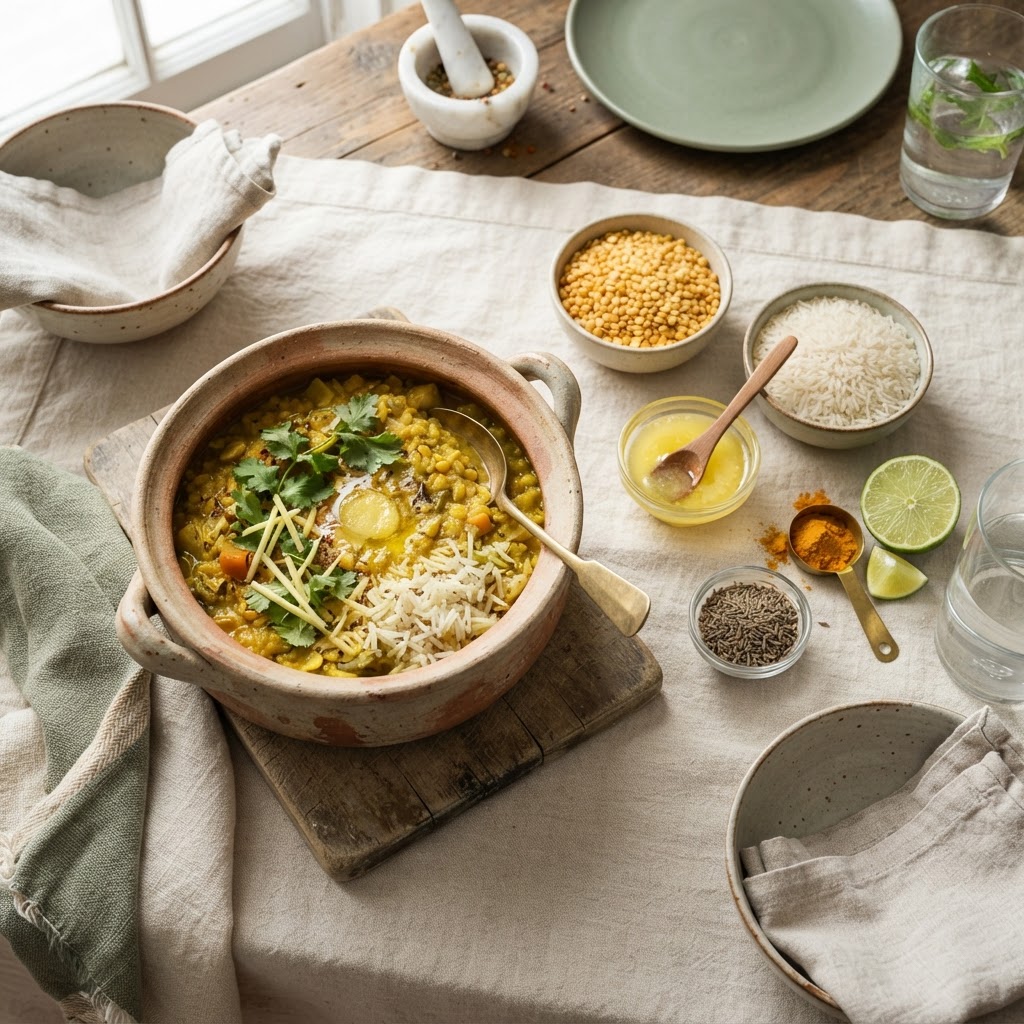
The Kitchari Cleanse: A Gentle Ayurvedic Reset
How to do a simple Ayurvedic kitchari cleanse: a basic kitchari recipe, a three-day plan, what to expect, and who should not attempt a mono-diet.
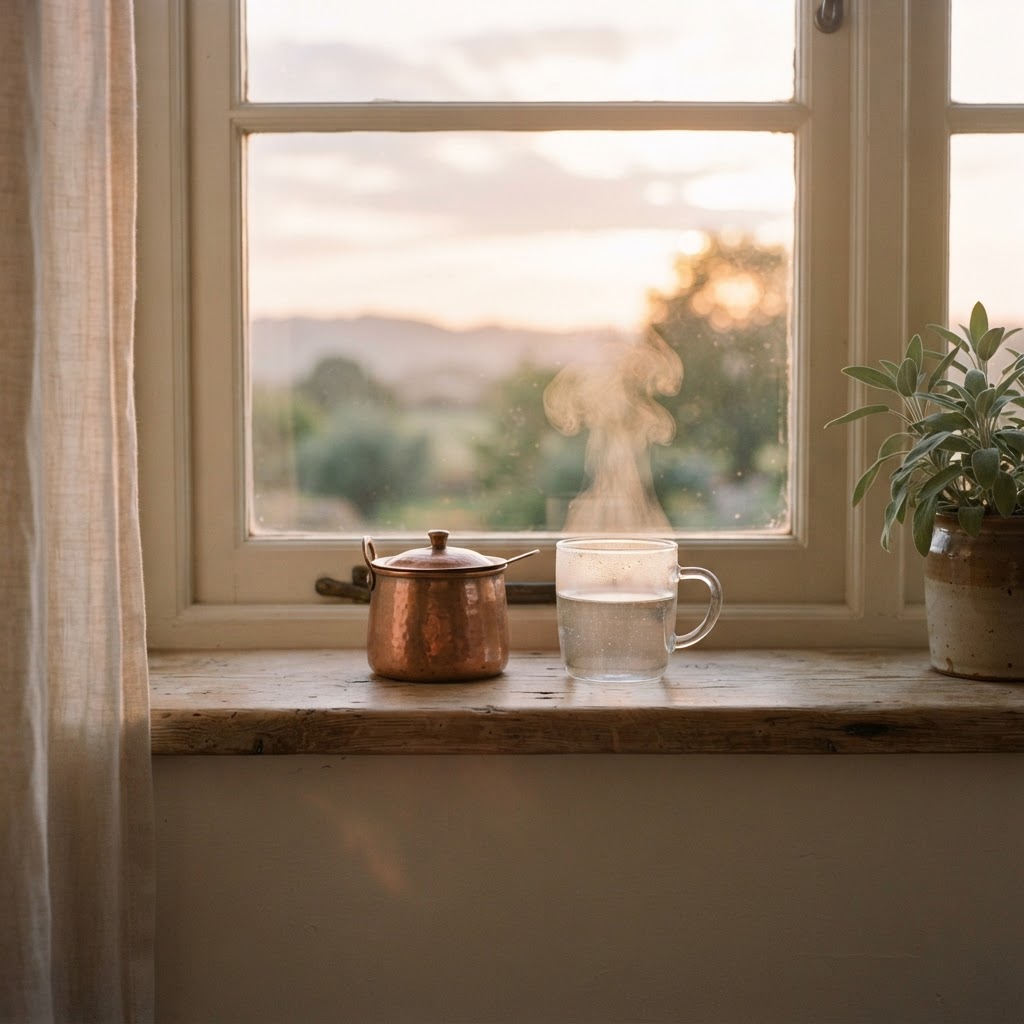
Why Ayurveda Recommends Drinking Warm Water
Ayurveda recommends warm water over cold. Why, how to drink it through the day, the classical practice of boiled water (ushnodaka), and what evidence exists.
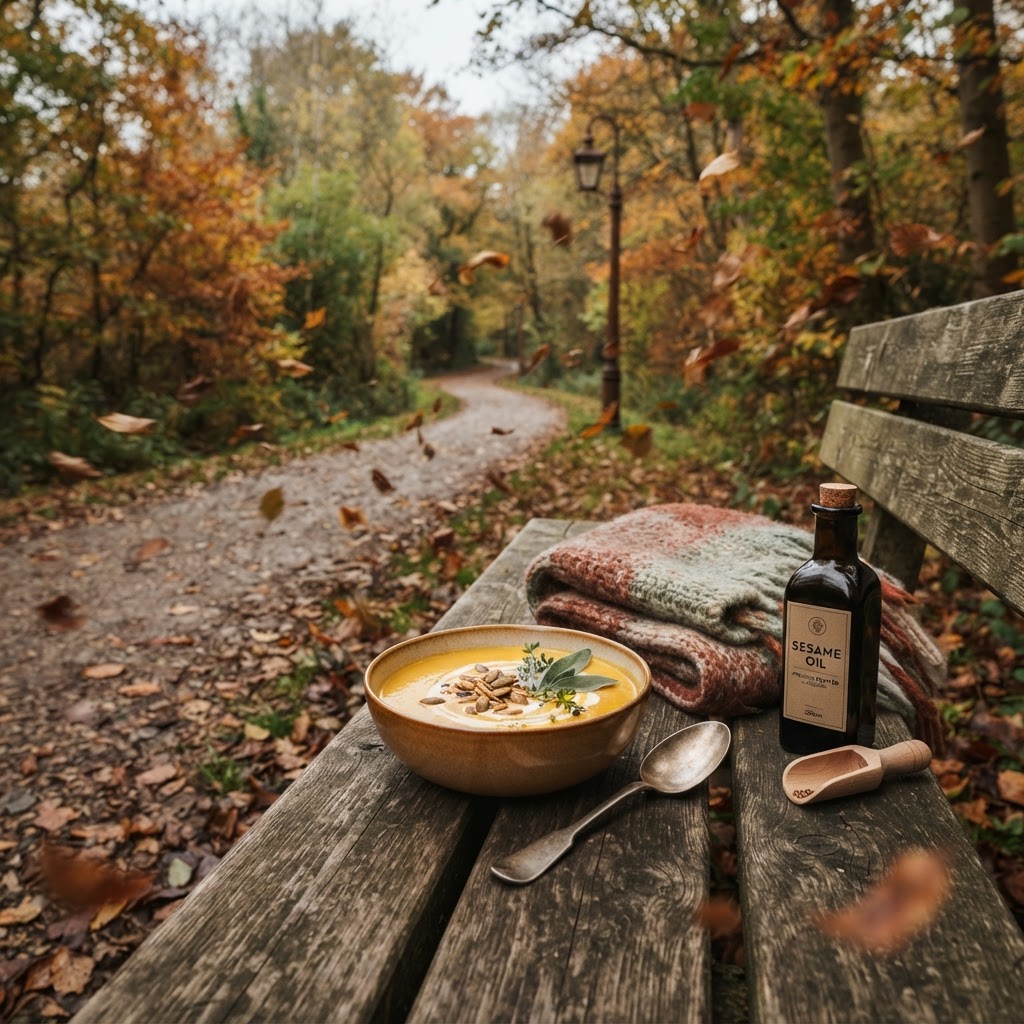
Vata Season: How to Stay Balanced in Autumn
Autumn is Vata season in Ayurveda — cold, dry, windy and changeable. The signs of autumn imbalance, and the food, routine and oil practices that keep you steady.

Spring Kapha Season: A Lighter Routine and Gentle Cleanse
Spring is Kapha season in Ayurveda, when winter heaviness melts. Signs of excess Kapha, lighter spring food, a gentle cleanse and a more energetic routine.
Free assessment
What is your dosha?
General advice only goes so far. The Ayurveda Nest assessment reads your constitution and your current imbalance in about ten minutes — so you know which guidance applies to you.
Take the dosha quiz