The Kitchari Cleanse: A Gentle Ayurvedic Reset
Ayurveda's idea of a cleanse is not starvation. It is one simple, warm, easily digested meal — for a few days.
6 min read · Ayurveda Nest editorial team · Updated
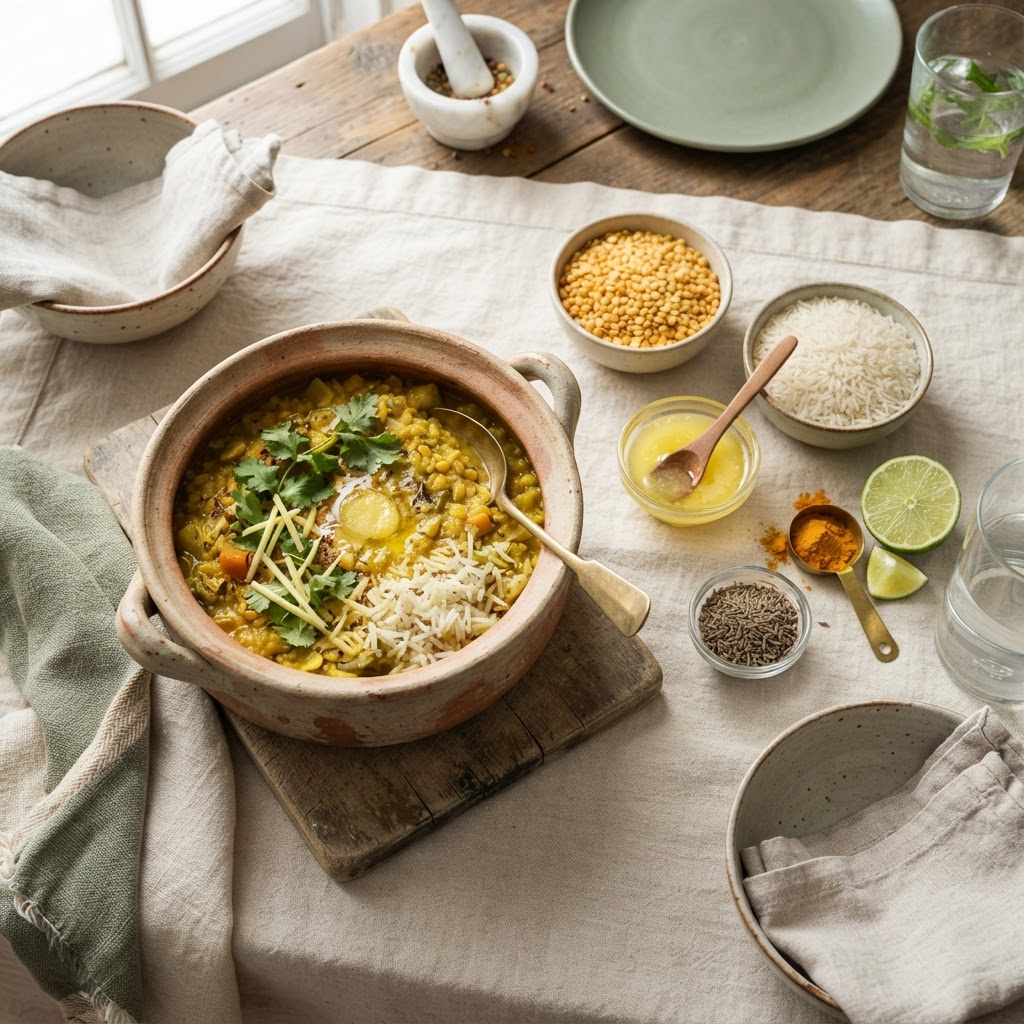
The short answer
A kitchari cleanse is a short Ayurvedic mono-diet, usually three to five days, of kitchari — split yellow mung dal and basmati rice cooked with ghee and digestive spices. It gives digestion a rest while still nourishing the body, and is traditionally done in spring or autumn. Eat kitchari for each meal, drink warm water and herbal tea, rest more, and reintroduce food gradually. It is not suitable in pregnancy, with diabetes on medication, eating disorders, or if you are underweight.
Basic kitchari recipe (serves 2–3)
- Rinse half a cup of split yellow mung dal and half a cup of basmati rice until the water runs clear.
- Warm one tablespoon of ghee; add half a teaspoon each of cumin and mustard seeds until they pop.
- Add a teaspoon of grated ginger, half a teaspoon of turmeric and a teaspoon of ground coriander.
- Stir in the dal and rice, add five to six cups of water, and simmer for 30–40 minutes until soft.
- Add chopped vegetables such as carrot or courgette in the last fifteen minutes. Finish with salt, lime and fresh coriander.
A simple three-day plan
- The day before: lighter meals; cut caffeine, alcohol and sugar.
- Days 1–3: kitchari for breakfast, lunch and dinner, eaten warm and until satisfied.
- Sip warm water or cumin-coriander-fennel tea through the day.
- Go to bed early; keep exercise to walking and gentle yoga.
- Afterwards: reintroduce simple foods over two days before returning to your normal diet.
What to expect
Many people notice lighter digestion and a cleaner tongue by day two or three. Headaches in the first day often come from caffeine withdrawal. The claims of deep toxin removal are classical rather than scientific; what can be said is that a few days of simple, warm, low-sugar, alcohol-free food gives most digestive systems a welcome break.
Who should not do it
Avoid a kitchari cleanse in pregnancy or breastfeeding, with diabetes treated by medication, with a history of eating disorders, when underweight, during illness, or while taking medication that must be taken with specific foods. Anyone with a medical condition should check with their doctor first.
Free assessment
What is your dosha?
General advice only goes so far. The Ayurveda Nest assessment reads your constitution and your current imbalance in about ten minutes — so you know which guidance applies to you.
Take the dosha quizFrequently asked questions
- How long should a kitchari cleanse be?
- Three days is a good first cleanse; traditional cleanses range from three to seven days.
- Can I eat anything besides kitchari during the cleanse?
- Most versions allow cooked vegetables stirred in and warm herbal teas. Avoid snacks, sugar, caffeine and alcohol.
- When is the best time for a kitchari cleanse?
- Spring and autumn, at the junctions between seasons.
Keep reading