Dinacharya: The Ayurvedic Daily Routine, Hour by Hour
Ayurveda's most powerful prescription costs nothing: doing the same things at the same times, aligned with the rhythm of the day.
7 min read · Ayurveda Nest editorial team · Updated
The short answer
Dinacharya is the Ayurvedic daily routine. It aligns your habits with the dosha clock: wake before 6am, scrape the tongue and drink warm water, move and eat a moderate breakfast, make lunch the largest meal between 12 and 1pm, eat a light early dinner, and be in bed around 10pm, before the late-night Pitta period begins.
The dosha clock
Ayurveda divides the day into two cycles of three periods, each governed by one dosha. Working with these periods is the basis of dinacharya.
- 6–10am, Kapha: heavy and stable. Movement is easiest to benefit from now; oversleeping into it leaves you sluggish.
- 10am–2pm, Pitta: sharp and hot. Digestion is strongest — the best time for the main meal and demanding work.
- 2–6pm, Vata: light and mobile. Creative thinking is good; energy and focus can dip.
- 6–10pm, Kapha: the body naturally slows. The easiest window to fall asleep.
- 10pm–2am, Pitta: the body digests and repairs. Staying awake here produces the "second wind" that ruins sleep.
- 2–6am, Vata: light and clear. Classically the best time to wake, meditate and study.
Morning
- Wake before sunrise, ideally before 6am, during the light Vata period.
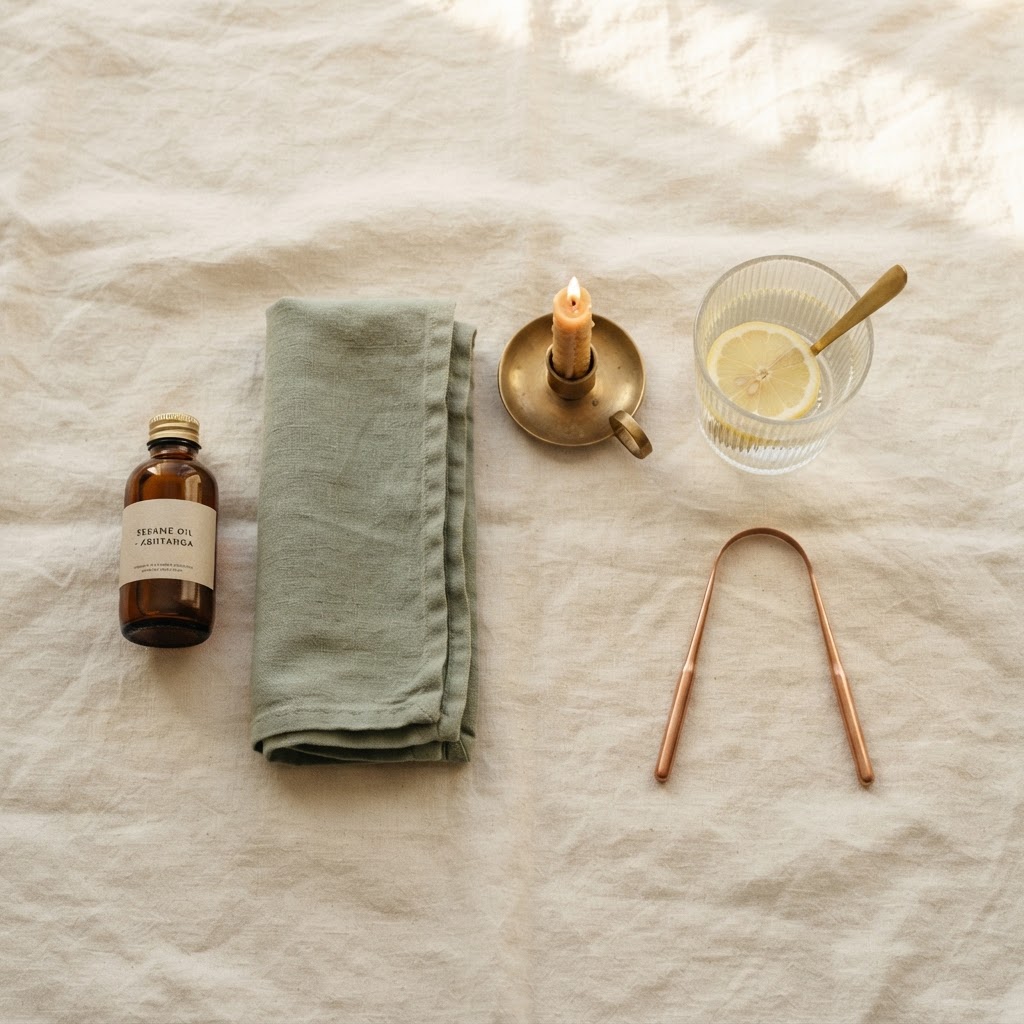
- Scrape the tongue with a copper or steel scraper, then brush.
- Drink a cup of warm water to wake digestion and encourage elimination.
- Five to fifteen minutes of breathwork or meditation.
- Abhyanga (warm oil self-massage) before bathing, several times a week.
- Movement suited to your dosha, then a breakfast sized to your real appetite.
Midday
Eat your largest meal between noon and 1pm, when digestive fire peaks. Sit down, eat without screens, and take a short, easy walk afterward. This single change resolves a surprising amount of bloating and afternoon fatigue.
Evening
Eat a light, warm dinner at least two to three hours before bed. Dim the lights and screens as the evening Kapha period begins. A warm drink, a foot massage with oil and a few minutes of slow breathing all help the nervous system descend. Aim to be asleep by 10–10:30pm.
Start with three habits, not twelve
Dinacharya fails when people attempt all of it at once. Consistent wake time, lunch as the main meal and an earlier bedtime deliver most of the benefit. Add tongue scraping and oil massage once those feel automatic.
Free assessment
What is your dosha?
General advice only goes so far. The Ayurveda Nest assessment reads your constitution and your current imbalance in about ten minutes — so you know which guidance applies to you.
Take the dosha quizFrequently asked questions
- What time should you wake up in Ayurveda?
- Ideally before 6am, during the Vata period of the early morning, when the mind is light and clear.
- Why is lunch the biggest meal in Ayurveda?
- Digestive fire (agni) is strongest between 10am and 2pm, the Pitta period, so a large meal is digested most completely then.
- Does dinacharya differ by dosha?
- The structure is shared, but details vary: Vata needs more regularity and warmth, Pitta needs cooling and moderation, Kapha needs earlier waking and more vigorous movement.
Keep reading