The Vata-Pitta Diet: Eating for Air and Fire
Vata wants warmth. Pitta wants cooling. The Vata-Pitta diet lives in the pleasant middle — warm but never fiery.
5 min read · Ayurveda Nest editorial team · Updated
The short answer
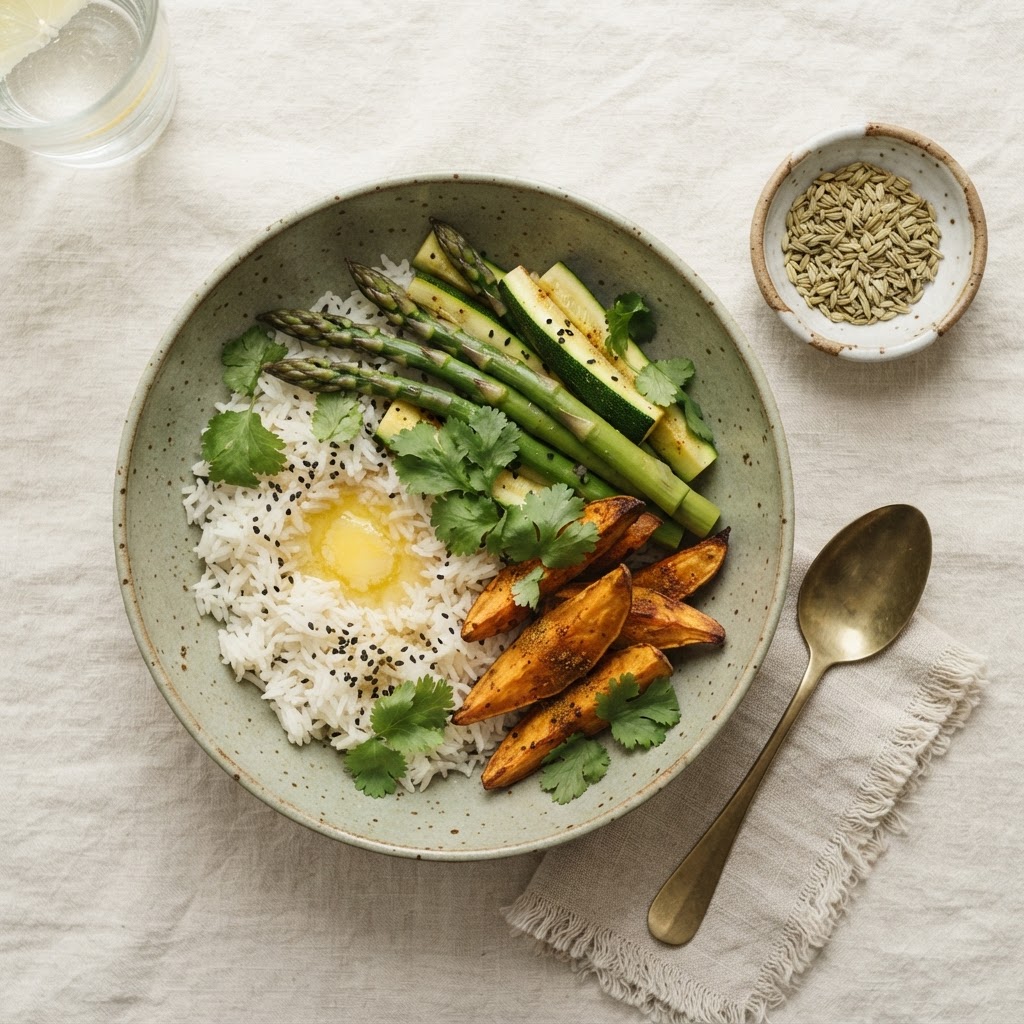
A Vata-Pitta diet favours warm (not hot), moist, well-cooked food with mild spices, and leans on the sweet taste, which calms both doshas. Good staples are basmati rice, oats, ghee, cooked vegetables like zucchini, asparagus and sweet potato, mung dal, and sweet ripe fruit. Reduce raw, cold and dry food (which aggravate Vata) and chilli, sour, fried and fermented food (which aggravate Pitta). Lean cooler in summer and warmer in autumn and winter.
The shared ground: the sweet taste
Vata and Pitta are both pacified by the sweet taste — not sugar, but naturally sweet, nourishing foods like grains, milk, ghee, root vegetables and ripe fruit. This makes sweet the anchor of every meal. Bitter and astringent suit Pitta, while salty and sour suit Vata; use those in moderation depending on which dosha is currently higher.
Foods to favour
- Grains: basmati rice, oats, quinoa, wheat in moderation.
- Vegetables, cooked: zucchini, asparagus, sweet potato, carrots, green beans, leafy greens with ghee.
- Proteins: mung dal, red lentils, paneer, eggs, chicken or fish if you eat them.
- Fats: ghee first, then olive and coconut oil.
- Fruit: sweet, ripe pears, grapes, figs, dates, mango, melon (on its own).
- Spices: cumin, coriander, fennel, cardamom, turmeric and a little fresh ginger.
Foods to reduce
- Raw salads, iced drinks and cold leftovers — hard on Vata digestion.
- Chilli, garlic in quantity, vinegar, tomatoes and sour fermented food — heating for Pitta.
- Dry crackers, popcorn and rice cakes — dry and light, aggravating Vata.
- Alcohol and coffee — heating and drying, a double hit.
Adjusting with the season
In summer, Pitta rises: choose more coconut, cucumber, coriander and cooling grains, and ease off ginger. In autumn and early winter, Vata rises: make meals warmer, soupier and more oily, and add a little more ginger and cinnamon. Regular meal times suit both doshas all year.
Free assessment
What is your dosha?
General advice only goes so far. The Ayurveda Nest assessment reads your constitution and your current imbalance in about ten minutes — so you know which guidance applies to you.
Take the dosha quizFrequently asked questions
- Is coffee okay for Vata-Pitta?
- Ideally in small amounts. Coffee is heating (Pitta) and drying and stimulating (Vata); if you drink it, have it after food, with milk, and before noon.
- Can Vata-Pitta eat spicy food?
- Mild aromatic spices, yes. Hot chilli is best kept to a minimum because it aggravates Pitta and dries Vata.
- What is a good Vata-Pitta breakfast?
- Warm oats or rice porridge cooked with milk, cardamom and a few soaked dates or stewed pear.
Keep reading